
What Is Neuma Course Premium?
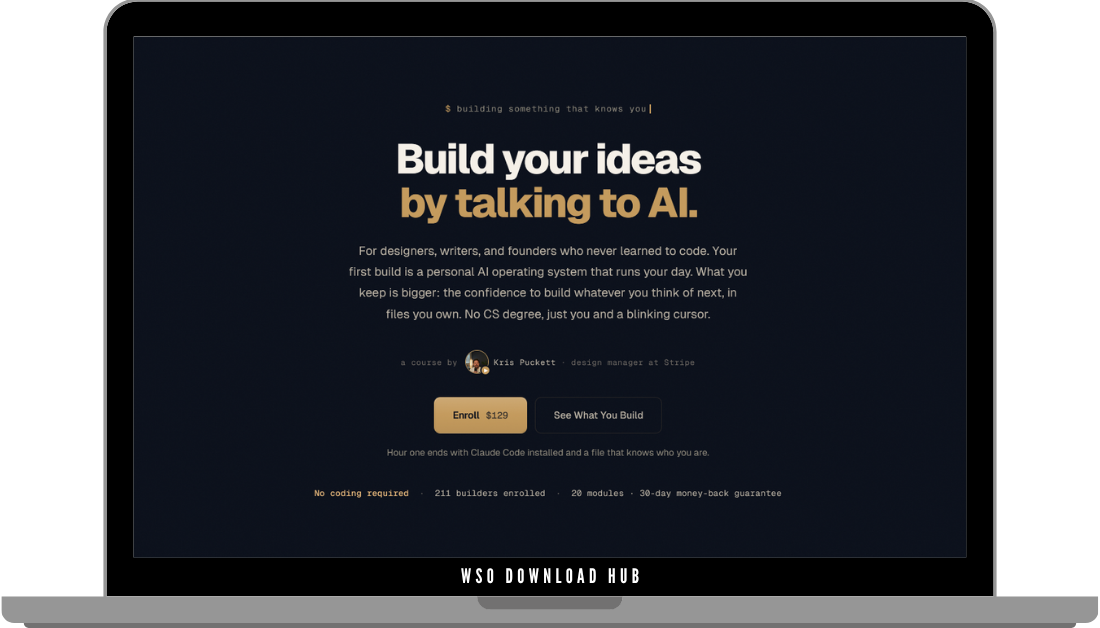
Neuma Course Premium is a practical learning program created by Kris Puckett for people who want to build with AI. It focuses especially on designers, writers, founders, and other professionals without traditional programming experience.
Instead of teaching coding through abstract syntax, the program introduces a conversational approach to building software. Learners describe what they need, review the result, and then guide the next improvement.
The first major project is a personal AI operating system that runs locally through files on your computer. However, the broader goal goes beyond one project. The course develops transferable thinking patterns for creating websites, dashboards, applications, workflows, and other AI-powered tools.
How Neuma Course Premium Approaches AI Building
Traditional programming education often starts with syntax, frameworks, and technical concepts. By contrast, Neuma Course Premium starts with a real project and develops technical confidence through hands-on building.
The central workflow follows a simple cycle: describe, review, and redirect. First, you explain the desired result in natural language. Next, you inspect what the AI produces. Then, you refine the direction until the project matches your requirements.
This approach helps learners understand how to collaborate with Claude Code rather than memorize isolated prompts. Consequently, the skills can remain useful as individual AI tools continue changing.
A Structured Learning Path
The curriculum contains 20 modules across foundation, advanced, and bonus material. It also includes starter templates, advanced files, and supporting resources for practical implementation.
The foundation material introduces Claude Code and gradually develops a personal AI workspace. Meanwhile, advanced topics expand into agents, orchestration, custom MCP servers, and application development.
Learners also receive templates that provide useful starting structures. However, the course encourages adapting those foundations instead of simply copying another person’s setup.
Build a Personal AI Operating System
The personal operating system acts as the central learning project. It gives students something practical to build while introducing reusable AI development principles.
The system can maintain context about your role, priorities, working preferences, constraints, and recurring responsibilities. Therefore, each interaction can begin with richer information than an isolated chatbot conversation.
A key component involves creating a structured workspace with Claude Code and markdown files. These files provide persistent information that future sessions can reference.
This approach also gives learners direct control over important project files. Rather than depending entirely on a closed platform, they can maintain their own evolving knowledge structure.
Persistent Context and AI Memory
One important concept inside Neuma Course Premium involves teaching AI what it should already know before receiving a request. This changes how users think about prompting.
Learners explore CLAUDE.md as a foundation for persistent project context. They can define roles, constraints, communication preferences, values, and other important instructions within the workspace.
The program then expands this foundation through several memory layers. These include AI-managed memory, daily records, and a structured knowledge base.
Over time, useful observations can move from temporary records into more permanent knowledge. As a result, the system can develop richer context through continued use.
Identity, Values, and Coaching Context
The course also explores how context can shape the AI’s role beyond simple task execution. Learners define how the system should respond, challenge assumptions, and support decision-making.
For example, users can document personal guardrails and recurring patterns. The AI can then reference those files when relevant situations appear again.
This creates a different experience from starting every conversation without historical context. Moreover, it demonstrates how structured information can improve ongoing AI collaboration.
Daily Briefings and Capacity-Based Planning
Another part of the course applies AI to everyday planning. Students learn to create daily briefings that combine relevant information into one organized overview.
A briefing may bring together schedules, tasks, personal context, and available capacity. Therefore, users can review their day before reacting to individual notifications or requests.
The program also introduces energy-based task management. Instead of treating every hour equally, learners examine when different types of work fit their actual capacity.
Tasks can then match suitable working windows based on their cognitive demands. This creates a more contextual approach than relying only on generic priority labels.
From Manual Interaction to Automation
As learners progress, the course moves beyond individual conversations and introduces reusable systems. Skills can capture instructions that would otherwise require repeated explanations.
Hooks can also support recurring rules or safeguards. Therefore, users can automate selected behaviors without manually requesting the same action every time.
The advanced material extends these ideas into AI agents, orchestration, and custom MCP servers. It also explores more ambitious projects, including building and shipping an iOS application.
However, the foundation remains consistent throughout the curriculum. Learners identify a problem, describe the desired outcome, evaluate the result, and improve the system iteratively.
Understanding Always-On AI Workflows
The bonus material introduces the idea of moving from manually activated tools toward more ambient AI systems. These workflows can respond according to schedules or specific events.
Scheduled triggers can initiate predictable routines at selected times. Meanwhile, event-driven triggers can respond when relevant changes occur.
Persistent context makes these automations more useful because the system can work with established information. Therefore, automation becomes connected to a broader operating structure rather than isolated commands.
The course also emphasizes restraint when designing these systems. Useful automation should reduce friction instead of creating unnecessary complexity or constant interruptions.
Who Can Benefit From Neuma Course Premium?
Neuma Course Premium primarily suits people who want to build with AI without following a traditional computer science path. Previous programming knowledge is not presented as the starting requirement.
The program may appeal particularly to:
- Designers who want to turn ideas and interfaces into functional digital projects.
- Writers who want to create personalized AI workflows and knowledge systems.
- Founders who need custom dashboards, internal tools, or operational systems.
- Creative professionals who want practical experience using Claude Code.
- Non-coders interested in agents, automation, and conversational software development.
Because the course centers on hands-on projects, learners actively build while studying each concept. This can make technical ideas easier to understand through direct experimentation.
Why the Method Extends Beyond One AI Tool
A major theme of the program involves learning principles rather than collecting temporary tricks. AI products will continue evolving, while strong problem-solving methods remain transferable.
The describe, review, and redirect cycle provides one example. It can support many projects because it focuses on communication and iterative improvement.
Likewise, persistent context, structured memory, and modular automation apply beyond a single personal operating system. These concepts can support client tools, websites, dashboards, applications, and internal workflows.
Therefore, the finished personal OS represents only one outcome. The deeper objective involves developing confidence to turn future ideas into working digital systems.
Final Thoughts on Neuma Course Premium
Neuma Course Premium offers a project-based introduction to building practical AI systems with Claude Code. It combines persistent context, memory, planning, automation, and advanced AI development concepts.
The personal operating system gives learners a concrete starting point. Meanwhile, the broader methodology teaches a repeatable process for approaching future projects through conversational building.
If you want to explore more resources covering AI, automation, digital business, and technical skills, visit WSO Download Hub. You can also browse WSO Downloads for additional programs covering AI workflows, development, productivity, marketing, and online business.
If you want to deepen your practical understanding of Claude-based development, explore Tim Yakubson – Unlock Claude Code. It provides a related learning path for working more effectively with Claude Code and building through AI-assisted development. Combined with Neuma Course Premium, it can broaden your understanding of conversational building, practical workflows, and creating useful systems with Claude.
Sales Page
Download Link for VIP Membership Users:

About The Author