

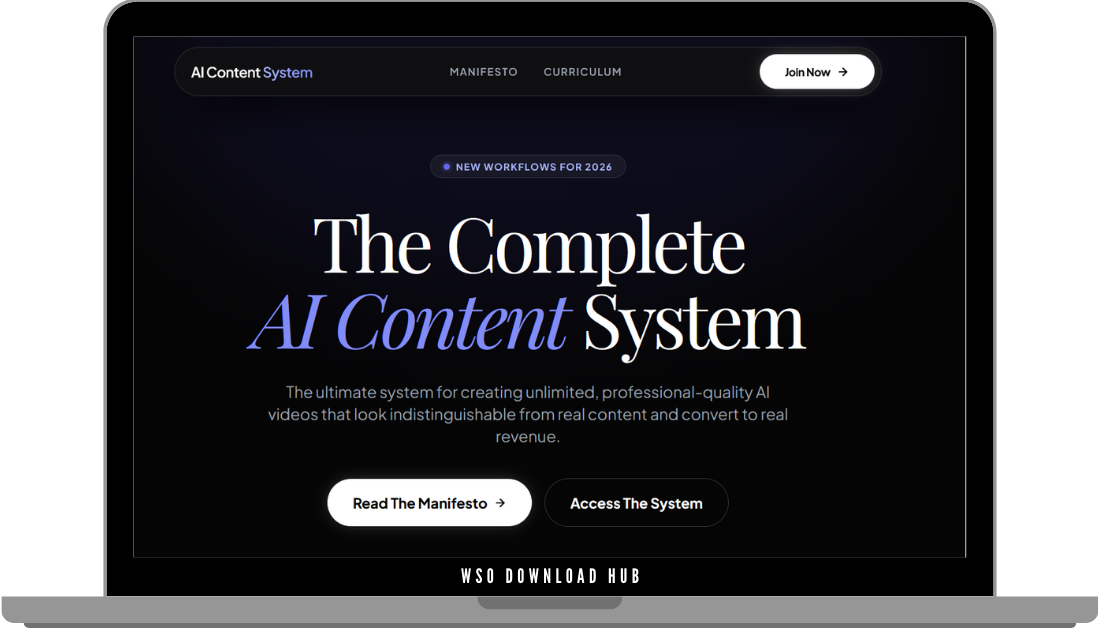
Miko – The Complete AI Content System V3
Miko – The Complete AI Content System V3 is a structured training system focused on professional AI-powered video production and monetization. Instead of relying on isolated tutorials, it connects creative techniques, production workflows, prompting, character consistency, and business strategies. Therefore, creators can develop a more repeatable approach to producing AI content at scale.
The system covers several leading AI video platforms while also exploring voice, scripting, UGC-style production, and quality enhancement. Moreover, it connects those creative skills with practical monetization models and scalable workflows.
What Is Miko – The Complete AI Content System V3?
The program provides an end-to-end framework for developing AI-generated video content with greater control and consistency. It moves beyond simple prompt experimentation by introducing workflows that guide production from initial concepts through finished assets.
Participants receive video-based training alongside workflow templates, prompt resources, and script frameworks. In addition, community access creates a space for continued learning as AI content tools evolve.
This combination makes the system relevant for creators who want both technical knowledge and a practical production process.
Build Strong AI Video Production Skills
Generating a video from a prompt may seem simple. However, producing consistent professional content requires more than one successful generation.
Creators need to understand visual direction, character consistency, scripting, voice, pacing, and quality control. They must also choose suitable tools for different production requirements.
The training addresses these areas as connected parts of a broader workflow. Consequently, creators can approach AI video with greater structure instead of depending on unpredictable experimentation.
Work With Multiple AI Video Platforms
AI video technology continues to develop rapidly, and different platforms offer different creative strengths. The program introduces workflows involving tools such as Sora, Veo, Kling, and other production options.
Learning multiple platforms can provide greater flexibility. For example, one model may suit cinematic sequences, while another may perform better for specific creative requirements.
Rather than depending entirely on one tool, creators can choose workflows according to the content they want to produce.
Create More Consistent AI Characters
Character consistency remains one of the biggest challenges in AI-generated content. A character may change noticeably between images, scenes, or videos without a structured process.
Miko – The Complete AI Content System V3 explores methods for creating more recognizable characters across multiple assets. This skill becomes especially valuable when building recurring personas or branded content.
Consistent visual identity can support several applications:
- AI influencer content.
- Recurring social media characters.
- Branded advertising campaigns.
- Product-focused video sequences.
- Long-term storytelling projects.
As a result, creators can build recognizable digital identities rather than generating unrelated characters for every new video.
Develop AI UGC-Style Content
User-generated content has become an important format for social media advertising and organic marketing. Its conversational style can make promotional messages feel more natural and relatable.
The program explores AI-assisted workflows for producing talking-head and UGC-style videos. These methods can support product demonstrations, promotional concepts, reviews, and other creator-style formats.
However, effective UGC requires more than realistic visuals. Scripts, pacing, voice delivery, and audience relevance also influence whether the content feels convincing.
Therefore, the system connects technical generation with broader creative decisions.
Improve Voice and Character Alignment
Audio quality can strongly influence how viewers perceive AI-generated video. An unnatural voice may weaken otherwise convincing visual content.
The training covers voice generation and character matching as part of the production process. Creators can explore ways to align voice characteristics with a character’s appearance and intended personality.
When visual and audio elements work together, the final content can feel more cohesive. This becomes especially important for recurring characters and AI personas.
Reduce Common AI Video Imperfections
AI-generated media can contain visual details that reveal how the content was produced. These imperfections may include inconsistent movement, unnatural textures, or overly polished visual patterns.
Quality enhancement workflows help creators identify and reduce these problems. Upscaling and careful post-production can also improve the overall presentation.
At the same time, realism does not always mean perfect visuals. Small natural details can sometimes make generated content feel more believable.
Therefore, quality control involves balancing technical improvement with realistic presentation.
Use Prompt Libraries and Script Frameworks
Starting every project from scratch can slow production considerably. Reusable prompts and structured scripts provide a stronger starting point for repeated content creation.
The included resources help creators organize ideas and maintain greater consistency between projects. They can then adapt those foundations according to different platforms, audiences, and campaign goals.
This approach also supports faster experimentation. Instead of rebuilding the entire process, creators can modify individual variables and compare the resulting output.
Build and Launch AI Influencers
Beyond individual videos, the program explores how creators can develop AI personas around specific niches. A recognizable persona can provide continuity across content and audience interactions.
The process involves more than designing an attractive digital character. Creators also need a clear niche, consistent identity, suitable content themes, and an audience strategy.
Therefore, AI influencer development combines creative production with positioning and ongoing content planning.
Explore Multiple Monetization Models
Technical skills become more commercially useful when creators understand how businesses may apply them. The program introduces several potential models for monetizing AI content capabilities.
These can include brand collaborations, affiliate marketing, UGC services, and recurring client arrangements. Each approach requires different skills beyond content generation itself.
For example, client work requires communication and reliable delivery. Meanwhile, affiliate content depends heavily on audience alignment and effective promotion.
Understanding these differences can help creators select opportunities that fit their strengths and business goals.
Scale Content With Systems and Automation
Producing one strong AI video is different from maintaining a consistent production schedule. Higher output requires organized processes that reduce unnecessary repetitive work.
Miko – The Complete AI Content System V3 addresses scaling through templates, workflows, and standard operating procedures. These resources can help creators turn individual techniques into repeatable production systems.
Automation can also support selected stages of the workflow. However, creative judgment remains important when reviewing quality and maintaining a consistent direction.
The goal is not simply to create more content. Instead, creators need systems that increase output without sacrificing useful standards.
Who Can Benefit From This AI Content System?
The program may appeal to creators who want a structured approach to modern AI video production. It can also support marketers exploring new ways to produce creative assets efficiently.
Potential users include:
- Content creators exploring AI video production.
- Marketers producing social and advertising creatives.
- Entrepreneurs developing AI influencer projects.
- UGC creators expanding their production capabilities.
- Agencies seeking repeatable AI content workflows.
- Freelancers offering AI-assisted creative services.
However, tools alone cannot guarantee successful content. Strong results still depend on creative direction, audience understanding, testing, and consistent execution.
From Random Generations to Repeatable Workflows
One of the biggest differences between experimentation and professional production is repeatability. Random prompting may occasionally create impressive results, but businesses need more consistency.
A structured workflow makes each production stage easier to understand and improve. Creators can identify what works, document the process, and apply successful methods again.
This approach also makes troubleshooting easier. When a result falls short, creators can examine individual stages instead of restarting without direction.
Consequently, AI becomes part of an organized creative process rather than a tool for unpredictable one-off generations.
Final Thoughts
Miko – The Complete AI Content System V3 combines AI video production, character development, UGC workflows, voice creation, prompting, and quality enhancement. It also extends these skills into AI influencers, monetization strategies, automation, and scalable production systems.
The broader value comes from connecting multiple tools within one repeatable workflow. Therefore, creators can move beyond basic experimentation and develop a more organized approach to AI-powered content production.
For more resources covering artificial intelligence, content creation, marketing, and digital business, visit WSO Download Hub. You can also explore WSO Downloads for additional programs focused on AI workflows, video creation, automation, social media, and online business development.
If you want to complement advanced AI video workflows with a broader foundation for planning and producing AI-assisted content, explore Claire Hunt – AI Content Creation Guide. It provides a related perspective on integrating artificial intelligence into the creative process. For creators who also want to turn their ideas into attention-focused social content, Juliete Mirella – Viral Threads GPT adds a complementary approach to generating hooks, Threads content, content ideas, and audience-focused posts. Together with Miko – The Complete AI Content System V3, these resources connect content planning, AI video production, social media publishing, and repeatable creative workflows into a more versatile content strategy.
Sales Page
Download Link for VIP Membership Users:

About The Author